
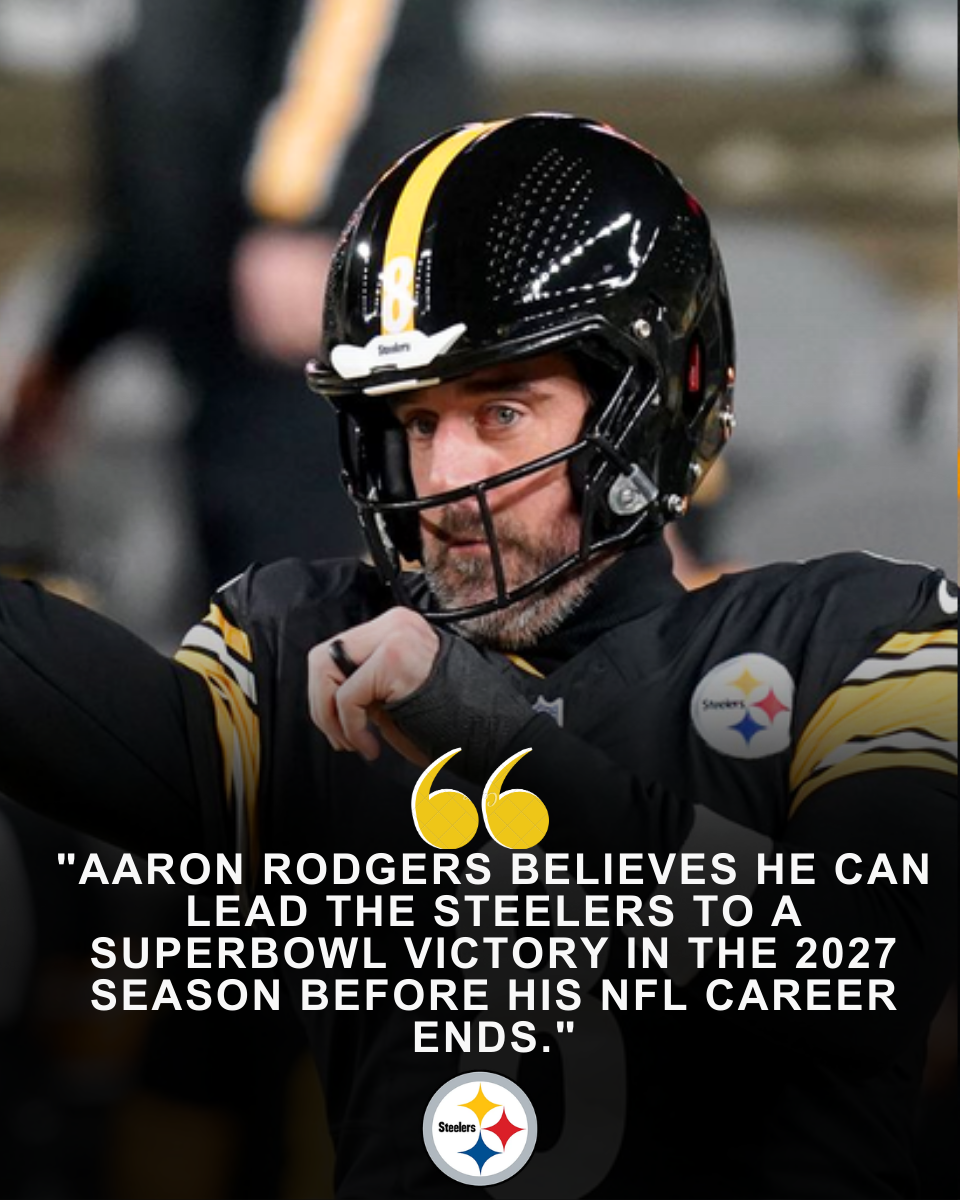
Aaron Rodgers has ignited a firestorm across the NFL landscape by declaring that he believes he can lead the Pittsburgh Steelers to a Super Bowl victory in the 2027 season, a claim many see as either legendary confidence or delusional ambition.
The four-time MVP, whose career has been defined as much by controversy as brilliance, is reportedly convinced that his final chapter will not be a quiet fade into retirement but a thunderous march toward football immortality in black and gold.
Critics immediately pounced on the statement, arguing that a quarterback entering the twilight of his career promising a championship three seasons ahead sounds more like a Hollywood script than a realistic blueprint for Lombardi success.
Supporters, however, insist Rodgers has always thrived when doubted, pointing to his 2010 championship run and multiple MVP campaigns as proof that betting against him has historically been an expensive mistake for skeptics.

The Steelers organization has not publicly dismissed the idea, fueling speculation that behind closed doors there may be serious discussions about constructing a roster capable of maximizing Rodgers' remaining elite arm talent.
Pittsburgh fans remain sharply divided, with some celebrating the possibility of a future Hall of Famer choosing their franchise as his final battlefield, while others fear mortgaging the team's future for a fleeting, uncertain gamble.
Rodgers' belief hinges on more than nostalgia, as he reportedly sees a defensive core in Pittsburgh that could rival the steel-curtain mystique, providing him the complementary dominance necessary to engineer a postseason run.
Yet the brutal physical demands of the NFL refuse to bend to optimism, and observers question whether a quarterback nearing his mid-forties can endure the weekly punishment required to survive an entire playoff gauntlet.
The AFC landscape grows more unforgiving each season, with younger quarterbacks like Patrick Mahomes, Josh Allen, and Joe Burrow redefining the standard for postseason excellence through mobility, resilience, and relentless offensive firepower.
Rodgers' critics argue that even if his football IQ remains razor sharp, the margin for error narrows dramatically when reflexes slow and recovery time lengthens, especially against defensive fronts engineered to dismantle aging passers.
Still, those close to Rodgers describe a competitor obsessed with legacy, someone unwilling to accept that his final memory in the league should be defined by injury setbacks or organizational turmoil.
The notion of a 2027 Super Bowl run serves as both a public declaration and a private motivator, a target that transforms every offseason workout and film session into preparation for one final statement.
Some analysts interpret Rodgers' proclamation as calculated theater, designed to command headlines, pressure the franchise into aggressive roster moves, and reignite a fanbase hungry for championship relevance after years of playoff frustration.
Others interpret it as a subtle challenge to the Steelers' front office, implying that if they truly want to capitalize on his presence, they must invest boldly in offensive line protection and explosive receiving threats.
The Steelers have long prided themselves on stability and tradition, but aligning with Rodgers' timeline would require embracing short-term urgency over long-term developmental patience, a philosophical shift not universally welcomed.
Social media erupted within hours of Rodgers' comments, with viral debates pitting loyalists who see destiny in the declaration against critics who label the claim as ego masquerading as confidence.
Rodgers has never shied away from polarizing public opinion, and this latest assertion reinforces his reputation as a quarterback who courts scrutiny while insisting that history will ultimately vindicate his bravado.
Teammates reportedly view his ambition as infectious rather than arrogant, describing a locker room atmosphere that intensifies whenever Rodgers speaks about unfinished business and the pursuit of a final ring.
Skeptics counter that inspiration alone cannot erase the arithmetic of age, pointing to past legends who attempted late-career comebacks only to discover that experience cannot permanently outrun biology.
The financial implications also loom large, as committing to Rodgers through 2027 would demand careful cap management and likely sacrifices elsewhere on the roster, potentially thinning depth at crucial positions.
In Pittsburgh, a city defined by grit and blue-collar realism, Rodgers' bold proclamation resonates differently than it might in glitzier markets, striking a chord between stubborn belief and cautious skepticism.
Longtime Steelers supporters recall Ben Roethlisberger's final seasons with mixed emotions, understanding that legendary careers often conclude with diminishing returns rather than cinematic triumphs.
Yet the allure of rewriting that narrative proves irresistible, especially when delivered by a quarterback who has built a career on threading impossible passes through impossibly tight windows under maximum pressure.
Rodgers appears convinced that his arm strength, football intelligence, and postseason composure remain intact enough to orchestrate one last deep playoff surge, provided the organizational alignment supports his mission.

Television panels now dissect every practice clip and sideline interaction for clues, transforming Rodgers' 2027 prediction into a countdown that amplifies scrutiny with each passing season.
Detractors argue that publicly forecasting a championship years in advance invites humiliation, as the NFL's volatility routinely humbles even the most meticulously constructed contenders.
Believers counter that championship teams often begin with audacious declarations, insisting that clarity of vision can galvanize a franchise otherwise drifting in cautious mediocrity.
The Steelers' younger players stand at the center of this unfolding drama, tasked with balancing respect for Rodgers' résumé with the reality that their own primes must align with his narrowing window.
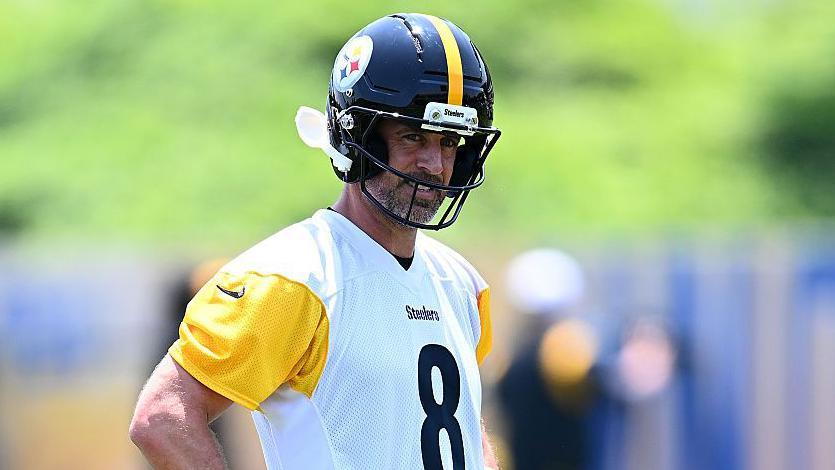
Rodgers' statement ultimately transcends simple bravado, reflecting a deeper refusal to let age dictate destiny in a league that constantly replaces yesterday's heroes with tomorrow's phenoms.
Whether this prophecy culminates in confetti falling over a triumphant Steelers squad or dissolves into another cautionary tale about chasing fading glory remains an open battleground of opinion.
For now, the NFL world watches a veteran quarterback daring to script his own ending, staking his legacy on a specific season and a specific franchise in a way few modern stars would risk.
If 2027 arrives without a Lombardi Trophy in Pittsburgh, critics will brand this declaration as hubris exposed, but if Rodgers somehow delivers, the league will be forced to confront the uncomfortable power of belief defying probability.