
"They're ruining baseball."
Keith Law just lit that argument on fire — and didn't leave much standing.

Rewritten, Dramatic Article**
⚡ FLASH NEWS: The debate that has haunted the Los Angeles Dodgers for years just took a decisive turn — and this time, it wasn't a Dodgers executive defending the franchise.
It was Keith Law.
For seasons now, critics have leaned on the same tired claim: the Dodgers are bad for baseball. Too much money. Too many stars. Too many splashy free-agent signings. The narrative paints Los Angeles as a financial juggernaut steamrolling competitive balance.

But according to one of the sport's most respected evaluators, that argument doesn't hold up.
Because the Dodgers' dominance isn't just built on spending.
It's built on development.
While headlines scream about nine-figure contracts and creative deferrals, something quieter — and arguably more impressive — has been unfolding behind the scenes. Andrew Friedman and the Dodgers' front office have managed to keep one of the deepest farm systems in baseball fully stocked year after year.

And Keith Law made it official.
In his latest organizational rankings, Law placed the Dodgers' farm system second in all of baseball — trailing only the Milwaukee Brewers, widely regarded as the gold standard for player development.
That ranking alone dismantles the idea that Los Angeles is simply "buying championships."
The Brewers are often praised because they have no choice but to develop talent. As a small-market franchise, Milwaukee must draft well, scout aggressively, and maximize every prospect. Their margin for error is razor thin.
The Dodgers? They don't have to rely on development.
They choose to.

And that's what critics keep missing.
While the public fixates on blockbuster deals, Los Angeles quietly refreshes its minor league pipeline with calculated precision. The system isn't an afterthought — it's a weapon.
Consider the Michael Busch trade before the 2024 season. Busch was talented but blocked at the major league level. Instead of letting the asset stagnate, the Dodgers flipped him to the Chicago Cubs for Zyhir Hope and Jackson Ferris — both now viewed as top-100 prospects, with Hope emerging as one of the most electric young names in the sport.
That's not reckless spending.
That's strategic maneuvering.
For every headline-grabbing signing like Kyle Tucker, there's a quieter move building the next wave of talent. Prospects are developed not just to fill roster gaps, but to become high-value trade chips when opportunity strikes.

That dual-track strategy — spending smart and developing smarter — is what separates the Dodgers from most of baseball.
And it's exactly why the "ruining baseball" narrative feels increasingly hollow.
Big-market teams have had money before. Few have paired it with this level of scouting discipline and developmental consistency. Los Angeles drafts aggressively, invests heavily in analytics and biomechanics, and builds infrastructure that maximizes player growth.
The result? A machine that regenerates.
When stars age out, replacements are ready. When holes appear, options exist. When trades are needed, leverage is available.
That isn't bad for baseball.
It's organizational excellence.
Keith Law's ranking doesn't just validate the Dodgers' process — it exposes how simplistic the criticism has become. Spending alone doesn't sustain a dynasty. If it did, plenty of wealthy franchises would be hanging banners.
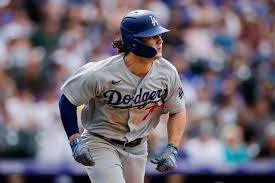
Instead, Los Angeles has mastered contract structure in free agency while simultaneously nurturing a pipeline that keeps the engine humming.
Lost in the noise is a simple truth: the Dodgers aren't dominating because they have money.
They're dominating because they're better at building.
And if that's "bad for baseball," then the rest of the league might want to start taking notes.